
Trigger release
Responds to the plant, not the clock. NanoSoils releases nutrients on demand, triggered by the organic acids that roots exude when they need them.
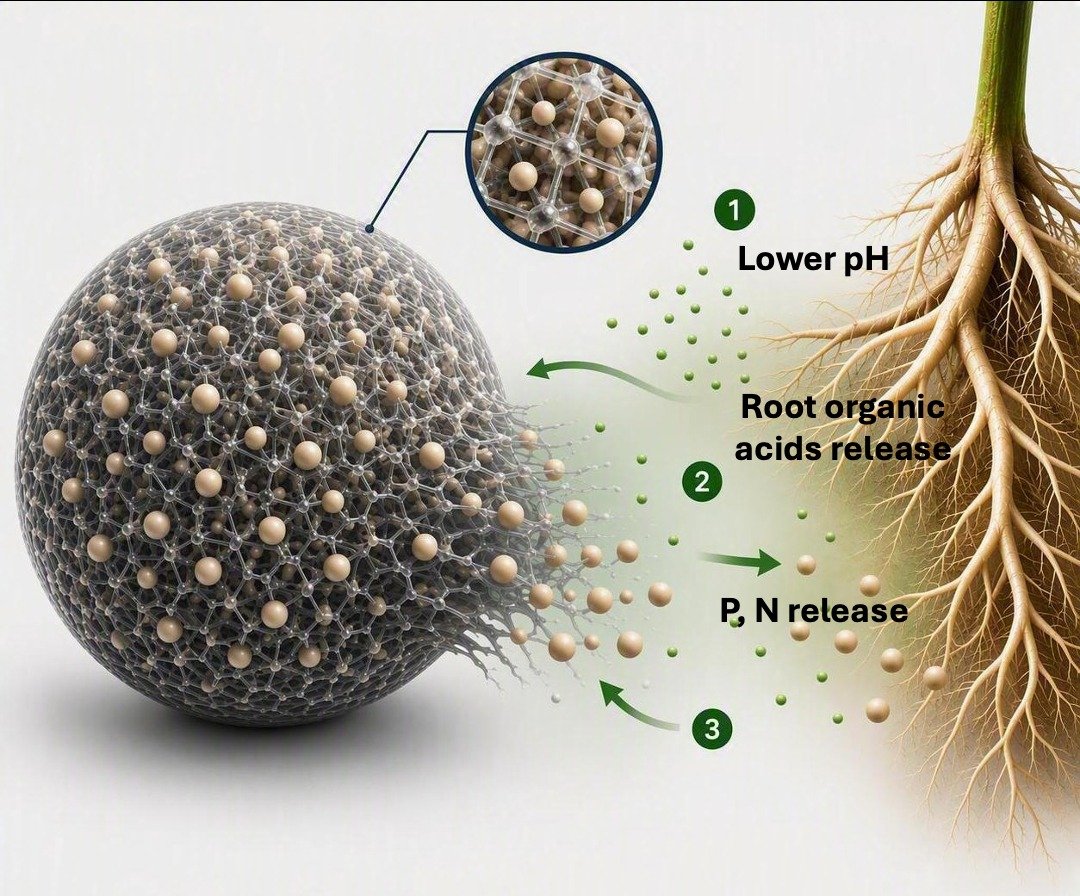
The root sends the signal
Roots exude organic acids
When roots need nutrients, they release organic acids into the root zone.
Local pH drops
The organic acids lower the pH right around the particle.
P and N are released
This root signal triggers phosphorus and nitrogen release from the particle.
Held until needed, released on demand
No root demand: nutrients held
- Release is negligible on first contact with water, for example at sowing or after rain.
- In acidic soils, early release stays low.
- No salt burst forms around the seed.
Roots call: nutrients released
- Roots exude organic acids, lowering the local pH.
- This root signal triggers P and N release from the particle.
- Under simulated root-zone conditions, release is strongly increased.
From the clock to the crop
Conventional controlled release manages how ingredients are delivered over time, at a rate set by water entry and temperature. Trigger release goes one step further: the plant itself decides when nutrients are released.
| Soluble fertiliser | Polymer-coated controlled release | NanoSoils trigger release | |
|---|---|---|---|
| What drives release | Water contact | Water entry and temperature, at a set rate | Root-zone signals |
| Matches crop demand | No | No, controlled by temperature and moisture | Yes |
| Burst on first wetting | Yes | Reduced | No |
| Plastic residue in soil | None | Polymer, microplastic | None; no polymers used |
Particles designed for the job
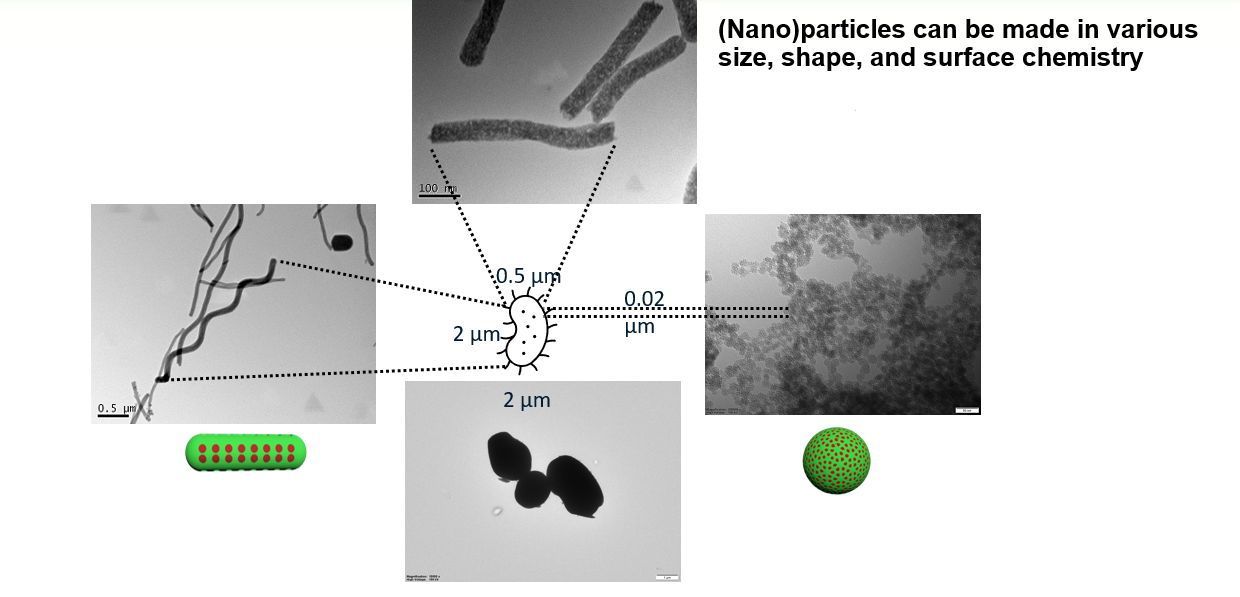
(Nano)particles can be made in various sizes, shapes and surface chemistries, from rods and spirals to spheres, from micrometre to nanometre scale.
See it in a product
Plastic-free, mineral-based fertiliser that holds nutrients until roots call for them.